AI SEARCH VISIBILITY · SOURCE-VERIFIED REVIEW
AthenaHQ Review: Features, Pricing and the Real Cost of GEO in 2026
AthenaHQ promises a path from AI-answer monitoring to action: find the right questions, see which sources shape the answer, and improve the content behind your brand. Its free entry point is appealing, but “unlimited prompts” and 11-model coverage need a closer look. Here is what the current offer includes—and how to evaluate it without confusing visibility with revenue.

Lead SEO & AI Specialist · 13+ years in SEO
Published & fact-checked November 21, 2026 · 18 min read
In this review
The short answer: a useful bridge from monitoring to action
AthenaHQ is worth shortlisting for a marketing team that wants prompt discovery, AI visibility reporting and a source-level action workflow together. The published Starter price and free Essential credits make the initial buying conversation more concrete than an enterprise-only quote. The important constraint is consumption: unlimited prompt storage is not unlimited monitoring.
- Best fit
- Teams with an owner for AI-search research, content and reporting.
- Current entry point
- Free Essential with 300 credits; Starter $295/month with 3,600 monthly credits. [1]
- Standout workflow
- Discover → tracked answers → Sources → reviewed content or outreach action.
- Main buying caution
- Starter API is a paid add-on; advanced targeting and claim-review features are listed on Enterprise. [1]
Evidence note: This is a public-documentation review, not a paid-account benchmark. We have not independently measured capture accuracy, setup time, support quality or traffic lift. Product facts and our editorial assessment are kept separate; no invented numeric score or case-study results are used.
What is AthenaHQ? A GEO/AEO platform, not just a rank tracker
AthenaHQ is a web-based platform for understanding and acting on how brands appear in AI-generated answers. The documented workflow includes brand and competitor setup, prompt monitoring, Olympus reporting, cited-source analysis and content recommendations. Discover helps select questions; Enterprise adds capabilities such as Oracle, Knowledge Base claim review and Athena Citation Engine (ACE). [1] [6]
GEO (generative engine optimization) and AEO (answer engine optimization) describe overlapping efforts to make a brand’s information useful, discoverable and accurately represented in AI answers. Unlike a Google rank tracker, the platform needs to distinguish a brand mention from a linked citation, and both from a measurable visit or sale.
A useful way to think about AthenaHQ is a three-part loop: choose a representative question set, collect and diagnose the answers, then implement a small number of evidence-led improvements. Its value depends on how well your team completes that loop—not simply on how many models or charts the plan advertises.
New to the category? Start with what GEO means and our comparison of AI search visibility vs. traditional SEO rankings.
AthenaHQ features in detail: where the added value is
1. Olympus: keep mentions, citations and competitors distinct
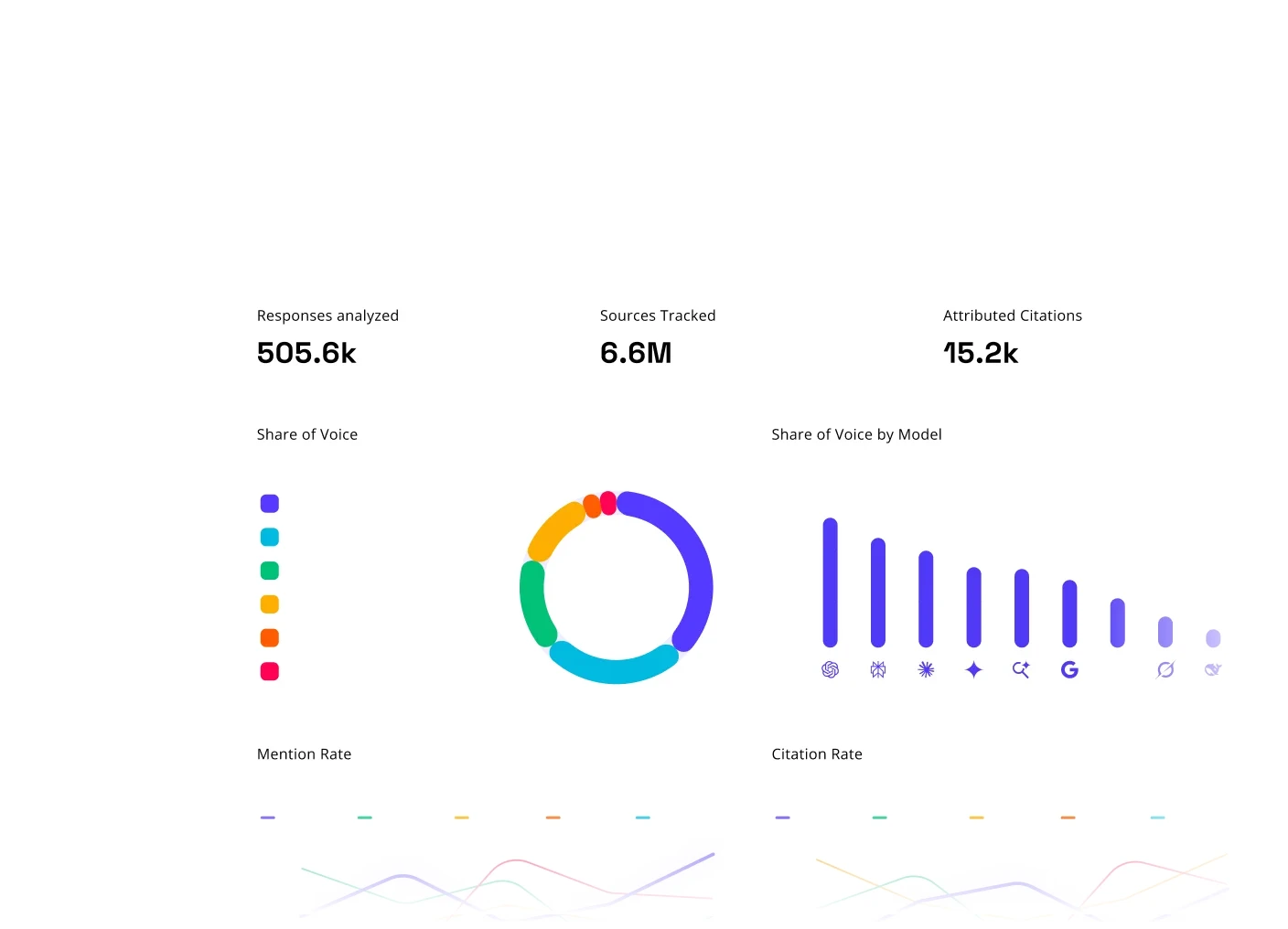
Olympus is the main analytics dashboard. The reference describes mention rate, citation rate, share of voice, position, model-level comparisons, competitor heatmaps, most-cited content and brand-trait sentiment. Filters include dates, schedules, models, competitors, prompts, personas and locations; configurable cards and saved views let teams focus on a defined segment. Some targeting and view capabilities depend on plan. [2] [1]
Practical value: a stable overall score can conceal weakness in a commercially important topic or one model. Start with the relevant slice, then open the underlying responses. A brand might be mentioned favorably without receiving a citation, or cited as a reference without being recommended. Those situations call for different actions.
Olympus documents PNG exports, paid-plan PDF and CSV exports, and recurring reports via email or Slack. These are useful reporting tools, but scheduled delivery does not by itself ensure fresh collection. Confirm the report window and the underlying prompt schedule together. [2]
2. Sources: follow the evidence down to the exact URL
Sources groups citations by domain or page and supports an All/Social split. Filters, source categories and saved views help isolate owned pages, competitors, partners and third parties. The source drawer can show cited pages, prompts and the underlying AI responses; YouTube-specific views may include creators and timestamps. Availability depends on the captured citations and active filters. [3]
The detail many buyers miss: a mention on the cited page is not the same as a mention in the AI answer. AthenaHQ documents these separately. Rescanning a page updates source-page checks; it does not rewrite the historical answer. That distinction helps prevent a team from claiming “we improved AI visibility” when it only refreshed a page scan.
Use source analysis to choose the next task: improve an owned page that is already relevant, correct outdated facts on an influential publisher’s page through legitimate editorial channels, or investigate why competitors appear in a cited comparison. A frequent citation is evidence of observed use—not proof that a particular page caused a recommendation.
3. Discover: build a defensible question set instead of guessing
Discover replaces the earlier Planner and Universe tabs. Its guide describes website analysis, Google Search Console, social sources, keyword gaps, competitive landscape research and custom instructions. Suggestions are organized by topic with source, funnel stage, intent, estimated volume and keyword value. You review candidates before adding them to tracking, and duplicate detection helps prevent redundant monitoring. Access to Discover and individual sources is plan-dependent. [4]
Important qualification: these are suggested prompts informed by source research. Search Console queries and competitor keywords are not a complete log of real AI conversations. Keyword-gap evidence shows demand worth investigating; it does not prove the competitor is currently cited by an AI model. Check that separately in the response dataset.
For example, a B2B team could ask Discover to focus on non-branded product-selection questions in one market while excluding support topics. Review the source summary, discard irrelevant suggestions, and tag the accepted prompts by intent. Keep a stable baseline rather than replacing the entire set whenever new suggestions arrive.
4. Content optimization and action: an editor still owns the outcome
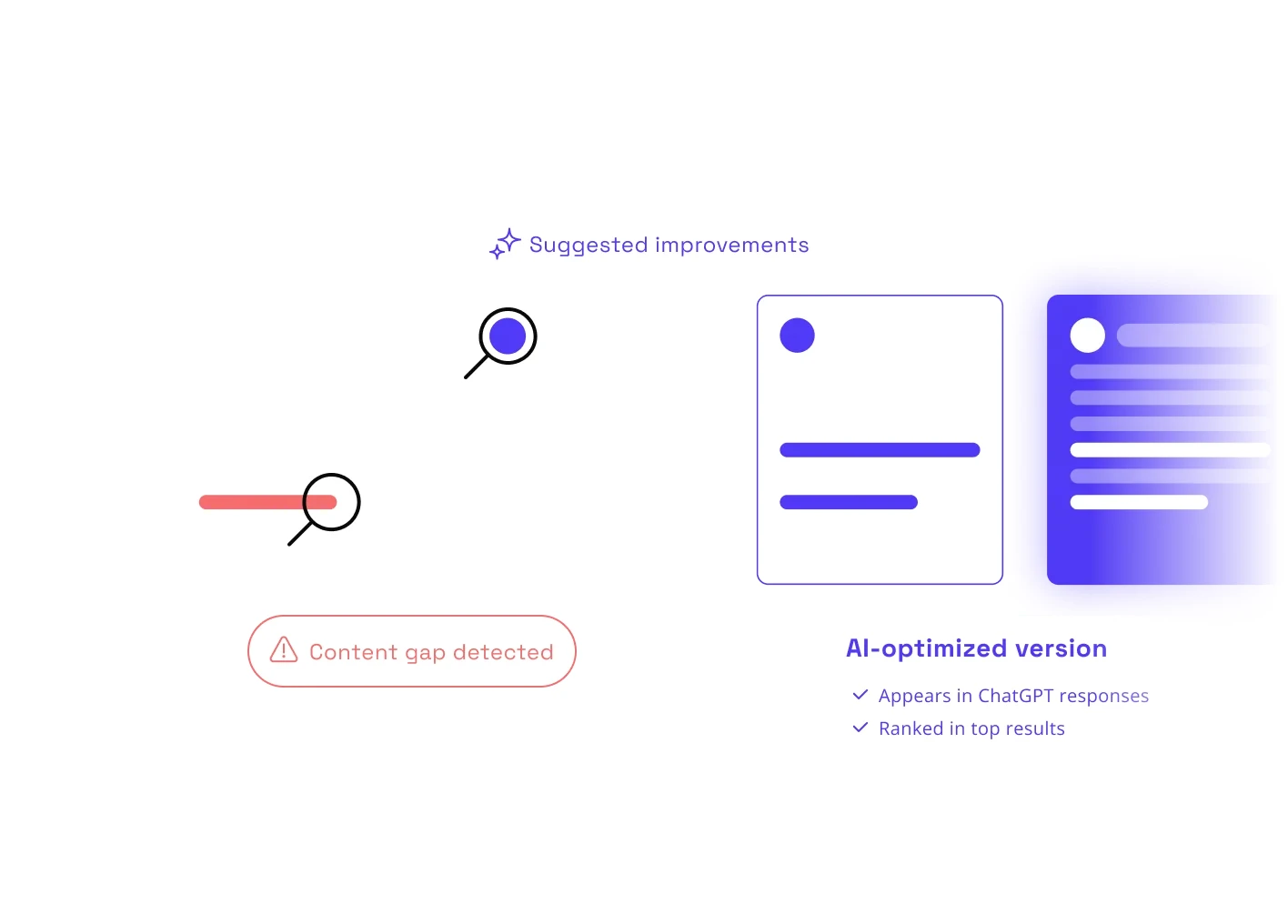
The current plans page lists on-page/off-page actions, a base content optimization agent and brand-guideline enforcement on Starter. Advanced content optimization, Athena Recommendation Engine and ACE are shown as Enterprise capabilities. Marketing terms such as “self-learning improvement” are not evidence of guaranteed citation or traffic lift. [1]
A useful initial task is a source-gap brief: identify a buying question where the brand is absent, read the relevant captured answers and cited pages, and draft a better-supported response on an appropriate owned page. Require an editor to verify product facts, originality and usefulness. Publish because the content answers a customer question—not because a tool labels it AI-optimized.
5. Oracle and Knowledge Base: distinguish wrong answers from wrong facts
Oracle checks AI responses against verified Knowledge Base facts. The guide requires Oracle access, at least 25 verified facts, a completed prompt run and website admin access to start a scan. It examines the latest completed run and separates inaccuracies, possible Knowledge Base issues and model disagreements. The pricing page lists Knowledge Base claim review and Oracle on Enterprise. [5] [1]
Why this can matter: a model might quote an obsolete product limit, but the company’s own fact record could also be outdated. Oracle’s review flow asks you to compare the claim, known fact and explanation. Possible sources are leads to investigate, not proof of causation. Acknowledge/Ignore changes the review status—it does not fix the fact, publish a correction or alter the AI model’s next answer.
This makes Oracle a research and governance aid, not a misinformation-removal button. A responsible workflow needs current fact records, human review, an accountable content owner and follow-up monitoring.
6. Integrations, exports and multi-team use
The setup guide describes Search Console, GA4, Shopify, Webflow, WordPress and Looker Studio connections. Search Console supplies keyword context for discovery; GA4 supplies traffic context; CMS integrations support content publishing. These are different datasets and permissions. Connect only what your pilot needs, and confirm plan availability and approval controls before enabling publishing. [6]
Starter advertises CSV exports and paid API access as an add-on. Enterprise lists included API access, custom websites/access controls, SAML/OIDC SSO, activity audit logs, multi-region/multi-language support, persona targeting and BI-tool support. Agencies should ask for a demonstration of client separation, billing pools, data exports and actual reporting entitlements—not assume unlimited users means unlimited client workspaces. [1] [7]
What AthenaHQ’s metrics mean—and what they do not
Olympus and Sources provide several useful signals, but they answer different questions. Treat every chart as a description of its filtered sample, not as a universal measure of what all users see. The following interpretation is based on the dashboard and source-column documentation. [2] [3]
| Metric | Useful interpretation | Common mistake |
|---|---|---|
| Mention rate | Presence of a brand in monitored responses. | Treating a mention as a link or endorsement. |
| Citation rate / attributed citations | Responses referencing tracked content. | Assuming each citation produced a visit. |
| Share of voice | Relative brand presence within the chosen competitor/sample scope. | Comparing numbers from different tools or competitor sets. |
| Source Citation % | Share of filtered responses citing a domain or URL. | Confusing this with the source’s website traffic. |
| Source Monthly Impressions | Estimated prompt volume multiplied by citation percentage. | Reporting it as measured audience reach. |
| AI Search Value | Modeled financial context using presence, keyword volume and CPC. | Reporting estimated advertising value as revenue. |
| Oracle findings | Claims requiring review against verified fact records. | Assuming an acknowledged finding corrected the model. |
Keep three distinctions visible: observed answers vs. modeled demand; source-page mentions vs. answer mentions; and estimated value vs. actual traffic/conversions. Olympus says its financial metrics use Google keyword volume and CPC context. Sources explicitly describes Monthly Impressions as an estimate, not measured traffic.
When a trend changes, attach the date range, schedule, models, market, prompt set and response count. Look at absolute counts alongside percentages. Adding competitors or changing cadence can change the result without any improvement in the underlying customer experience. Review raw responses before telling stakeholders that a strategy worked.
Our guide to LLM citation analytics explains how to turn these signals into a source-level action plan.
AthenaHQ pricing in November 2026: the plan is only half the calculation
The official plans page currently lists the following offer. Prices below are the displayed monthly prices; annual billing advertises a 17% discount. Confirm the actual annual invoice, renewal and taxes before buying. [1]
| Plan | Displayed price | Included capacity | Key caveat |
|---|---|---|---|
| Essential | Free | 300 credits ($25 free credit); five listed models; unlimited users. | Monthly replenishment of the free allotment is not clearly established. |
| Starter | $295/month | 3,600 credits/month; 11 models; unlimited topics, prompts and competitors; one-month rollover. | API and extra credits cost more; country-level support, not Enterprise multi-region scope. |
| Enterprise | Custom | Negotiated credits, websites and controls; API, advanced targeting and claim-review features listed. | Get the precise allocation, support and entitlements in writing. |
Which AI models are actually listed?
Essential: ChatGPT, Perplexity, Google AI Overviews, Gemini and Copilot. Starter: those five plus Google AI Mode, Claude, Grok, DeepSeek, Meta AI and Mistral—11 in total. Additional models are available upon request. Model access is not the same as having enough credits to run every prompt on every model at every desired interval. [1]
Credit math: why unlimited prompts is not unlimited tracking
The pricing table defines one credit as one AI response. As a simplified planning example, 50 prompts × 3 models × 4 runs is 600 responses; 100 prompts × 11 models × 4 runs is 4,400—already above Starter’s 3,600-credit monthly allocation. These are illustrative calculations, not billing guarantees. Expansions, additional locations/personas, overlapping schedules and other credit-consuming actions can increase usage.
Sources also documents approximately one credit per ten URLs for bulk source-page rescanning. Billing settings provides usage forecasts and an event-level credit log. Review the in-app estimate before starting a run and check the ledger afterward; do not assume all of the balance is available for recurring prompt monitoring. [3] [7]
The setup guide describes a Default schedule with models and weekly or monthly cadence, plus separate schedules on Enterprise. Confirm the configuration offered in your plan. A model that is supported but rarely collected may not answer your need for a timely trend. [6]
The add-ons and enterprise boundary
Starter API access is explicitly a paid add-on. Extra credits are also paid additions. Oracle, Knowledge Base claim review, ACE, advanced optimization, multi-region/language support and persona targeting are listed on Enterprise. Basic source analytics is not the same entitlement as the named Athena Citation Engine. Ask for a feature-by-feature quote if one of these capabilities is central to your use case. [1]
Our take: budget around a recurring job—such as monitoring one category and shipping reviewed improvements—rather than the size of the stored prompt library. The free tier can help assess fit, but confirm whether its credit balance renews before relying on it for ongoing reporting.
Explore AthenaHQ & its free planPros and limitations: our editorial assessment
Reasons to shortlist
- Free evaluation capacity and a published Starter price make the initial decision concrete.
- Broad listed model access on Starter without separate model fees advertised.
- Discover connects prompt selection with real website, search and audience signals.
- Sources separates domains, pages and answer evidence for actionable diagnosis.
- Reporting and a content-action layer can fit a marketing team’s existing workflow.
- Oracle’s documented fact-review process offers a useful Enterprise governance use case.
Reasons to hesitate
- Credit limits constrain collection despite unlimited topics/prompts.
- Starter API and extra capacity require additional spending.
- Several distinctive targeting and claim-review features sit on Enterprise.
- Free-credit renewal is not clearly specified on the public offer.
- Estimated financial and demand metrics need careful stakeholder explanation.
- We cannot verify capture accuracy or conversion lift from public documentation.
These are judgments about documented scope and purchasing trade-offs—not claims that we personally encountered slow support, bugs or a particular learning curve. We avoid unverified review counts, awards-based superiority and invented customer results. A high feature count is not a substitute for a successful pilot.
A practical 30-day AthenaHQ evaluation plan
Illustrative workflow—not an AIToolRush case study. Imagine a software company assessing visibility for one product category. The goal is to determine whether AthenaHQ produces useful decisions at a sustainable cost, not to promise a ranking or revenue result within a month.
Week 1: clean the inputs and scope the credits
Confirm the auto-extracted brand profile and competitor identifiers. Include legitimate product names and aliases, but avoid overly broad patterns that could count unrelated brands. Select one country, a focused set of customer questions and the models most relevant to your audience. Separate branded, non-branded and comparison intent. Save the schedule and record its estimated consumption.
Use sales questions and support tickets as inputs. Run Discover if your access allows it, check its source summary and approve only the useful suggestions. Connecting Search Console can add real search context, but do not assume Google queries exactly represent AI demand.
Week 2: inspect answers and build a source-gap list
Review Olympus by model and topic, then open Sources for prompts where competitors appear. Identify whether the gap concerns an owned page, a third-party comparison or an inaccurate claim. Read the raw answer and the exact cited page. Save a filtered baseline so later reports use the same scope.
Week 3: deliver a small number of reviewed improvements
Update a relevant owned page to answer a genuine buying or implementation question clearly, using supported facts and helpful comparisons. Send factual corrections to an influential publisher where appropriate. Trial a content brief rather than unattended bulk publishing. If Enterprise Oracle is available, prepare current verified facts and review its findings before assigning remediation.
Week 4: evaluate usefulness, stability and cost
Compare the same prompt sample and schedules; inspect answers behind changes rather than celebrating a single spike. Check actual credit consumption against the estimate, including rescans and additional actions. Review identifiable traffic in analytics separately from AI Search Value. Ask whether the team shipped better work faster and whether reporting remained understandable to stakeholders.
A defensible early success criterion: a source-level finding became an approved, implemented task, and the team could monitor the relevant segment afterward without unpredictable consumption. A month can reveal workflow fit; it is generally too short to prove durable, causal revenue growth.
Prepare with our prompt-selection framework and AI search visibility playbook.
AthenaHQ vs. Profound, Nightwatch, AIclicks and Semrush
Use a matched question set, market and collection window to compare platforms. Same-named models can still differ in collection method, search mode and sampling. The distinctions below concern workflow and buying fit—not an unsupported accuracy ranking.
AthenaHQ vs. Profound: a published starting point vs. an enterprise quote
AthenaHQ gives buyers a free credit allocation and a public Starter price; Profound currently sells custom Enterprise plans. Shortlist AthenaHQ for discovery, source diagnosis and a scoped monitoring/action workflow. Compare Profound when its prompt-demand research, own-site analytics and marketing-agent breadth matter. Verify Enterprise entitlements on both sides before comparing total cost. Read our Profound review.
AthenaHQ vs. Nightwatch: dedicated GEO vs. an SEO-first toolkit
Evaluate AthenaHQ when question discovery and citation-led content work are the center of the program. Evaluate Nightwatch when conventional rank tracking and AI monitoring within the same SEO workflow are important. Verify AI-specific country/location behavior separately from classic Google tracking coverage, and compare actual response allowances. Read the Nightwatch review.
AthenaHQ vs. AIclicks: compare the action workflow and allowances
Both are candidates for teams that want AI visibility plus content work. Compare model selection, data evidence, monthly response capacity, article/agent allowances and approval controls. AthenaHQ’s free entry point may suit exploration; its Enterprise features should be evaluated against what the team will actually use. Do not choose solely on a stored-prompt count. Read the AIclicks review.
AthenaHQ vs. Semrush: specialist workflow vs. existing-suite convenience
If your team already uses Semrush, assess its current AI visibility package before adding another platform. AthenaHQ may justify a separate subscription when prompt discovery, source research and content actions improve your process. It does not replace every conventional SEO job. Compare today’s packages, seats and collection scope—not old add-on prices. Read the Semrush review.
If you only need a lightweight report, also compare Peec AI, Otterly.AI and other options in our AI search visibility tools roundup. More modules do not automatically mean better value.
What to check before paying for AthenaHQ
Bring a real category and a few customer questions to the evaluation. A useful demonstration should connect an answer, a cited URL and an implementable action—not just show a polished aggregate chart.
- Model collection: Which interface/API and search mode is used for each model? How are region, language and conversation context represented?
- Schedule: Which cadences are allowed in our plan? How do overlapping schedules, expansions, personas and locations affect credits?
- Evidence: Can we open timestamps, full answers and exact citations? How are failed/no-citation responses counted?
- Brand matching: Can we audit ambiguous names, product aliases and competitor attribution?
- Free capacity: Does the Essential allocation replenish or expire? Which paid features are excluded?
- Total cost: What are API and extra-credit prices, rollover terms, overage controls and renewal conditions?
- Discovery: Which sources are accessible, what is estimated, and how are suggestions distinguished from observed AI demand?
- Enterprise scope: Are Oracle, ACE, Knowledge Base, multi-region targeting and advanced agents explicitly in our quote?
- Publishing: Can we require editorial approval, constrain permissions and prevent unintended CMS changes?
- Governance and exit: Review security documentation, data processing/retention, permissions and usable exports before committing.
Decision rule: choose Starter if its credit scope and base workflow cover a defined recurring job. Consider Enterprise when specific advanced capabilities solve an owned problem. If nobody will act on the findings, keep the pilot narrow rather than buying a larger feature set.
AthenaHQ review: frequently asked questions
Sources, evidence and editorial methodology
This review was researched against AthenaHQ’s official plans and documentation on November 21, 2026. Product facts are attributed inline. The two visuals are official illustrative product assets—not captures of our account. Vendor graphics and marketing statements are not independent performance evidence.
We assessed feature scope, metric interpretability, consumption economics and practical workflow fit. We did not access a paid AthenaHQ account, benchmark collection accuracy or verify business uplift. Workflow examples and credit calculations are explicitly illustrative. This page omits an invented numerical rating and unsupported ROI claims. The fact-check date records this research, not automatic monthly re-verification.
Public references sometimes describe features across several plans or legacy configurations. For buying decisions, this review prioritizes the current plans page; confirm your actual entitlement and charge at checkout or in a written quote. Free-credit renewal, Starter API pricing and evaluation terms remain questions to ask, not facts to assume.
- AthenaHQ plans and pricing
Current Essential, Starter and Enterprise offers, model lists, credits and feature entitlements.
- Olympus dashboard reference
Visibility metrics, model comparisons, financial estimates, exports and recurring reports.
- Sources guide
Domain/page citation analysis, column definitions, filters, exports and source rescanning costs.
- Discover guide
Prompt suggestions from websites, Search Console, social and keyword research; source access requirements.
- Oracle guide
Claim checking, verified-fact prerequisites and the distinction between reviewing a finding and changing an answer.
- Getting started and schedules
Brand/competitor identifiers, integrations, starter prompts and schedule configuration.
- Billing settings reference
Usage forecasts, organization/website pools, credit logs and billing management.
- AthenaHQ official product overview
Product positioning and the official illustrative visuals reproduced in this review; not independent performance evidence.
See our review methodology and affiliate disclosure. Found a change? Send a correction.
The bottom line: evaluate the loop, not the headline limits
AthenaHQ’s strongest proposition is the path from question selection to source-level diagnosis and reviewed action. It makes the initial evaluation accessible with free credits and a published Starter price, while reserving more advanced targeting and claim-review capabilities for Enterprise.
Our recommendation: start with one meaningful topic cluster, a realistic model/schedule budget and an owner for implementation. Check raw answers and source evidence, measure actual credit use and keep estimated value separate from revenue. Upgrade because a specific capability solves a demonstrated problem—not because “unlimited prompts” sounds like unlimited results.